
How can finance and insurance teams use QR codes?
Banks and insurers print on paper that clients keep and scan later, at a counter, at a mailbox or at home with a statement. A code on that paper puts the next step on the phone already in the client's hand, so a claim or a payment starts without a phone call.
An insurance QR code is a printed square on a claim card, policy letter or advisor card that opens a claim form or booking page when scanned. A bank can print the same kind of code on statements and branch posters. In QRStuff the code is static and fixed once printed, or dynamic and editable later.
A customer holding a mortgage statement scans the code on it and lands on the payment options, with no address to copy. A client on a branch visit scans the poster by the counter to book an advisor.
To make a first claim-card code without signing up, use the free QR code generator. Public notices raise the same trust questions; see QR codes for government agencies.
What does a client do after scanning a policy letter or statement?
A short letter with the detail one scan away
The letter stays short and the page holds the detail. A client scans to book a callback or start an account application, and nobody retypes a long address from paper.
Quote forms and app listings from print
Brochures, print ads and business cards can point to a quote form, a landing page or the app store listing for your mobile banking app.
Less paper at the counter
Instead of handing over a stack of forms, a branch can print a code for the application, the renewal form or the policy update page. The form is filled in on the customer's own phone, so nobody retypes handwriting.
One code for each document
Print a separate code on the policy letter, the statement and the business card. Each opens its own page, and a dynamic code lets you change that page later without touching the paper already in clients' drawers.
A payment code on an invoice or premium notice
A payment code carries what the payer's app needs, so they type less. PayPal holds an email, item name, amount and currency; UPI, the payment method used in India, holds a payee, name, amount and note. Both are dynamic codes on Full Suite and Enterprise (see pricing).
How do you make a QR code for a finance or insurance business?
Step 1
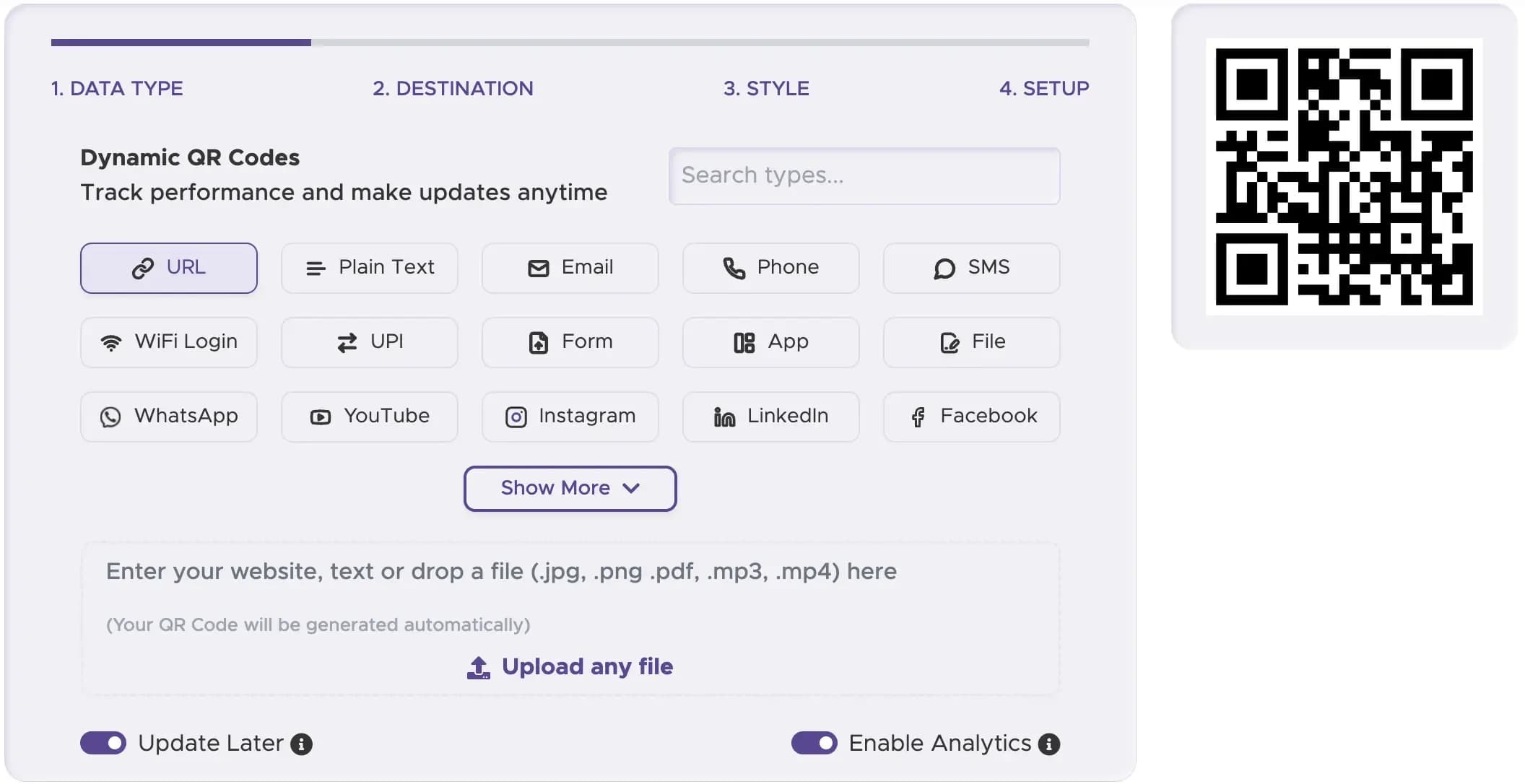
Match the code to the job
Start from the one thing the client must do after the scan, then choose the tile that does it. The code types near the end of this page match each tile to a job.
Step 2
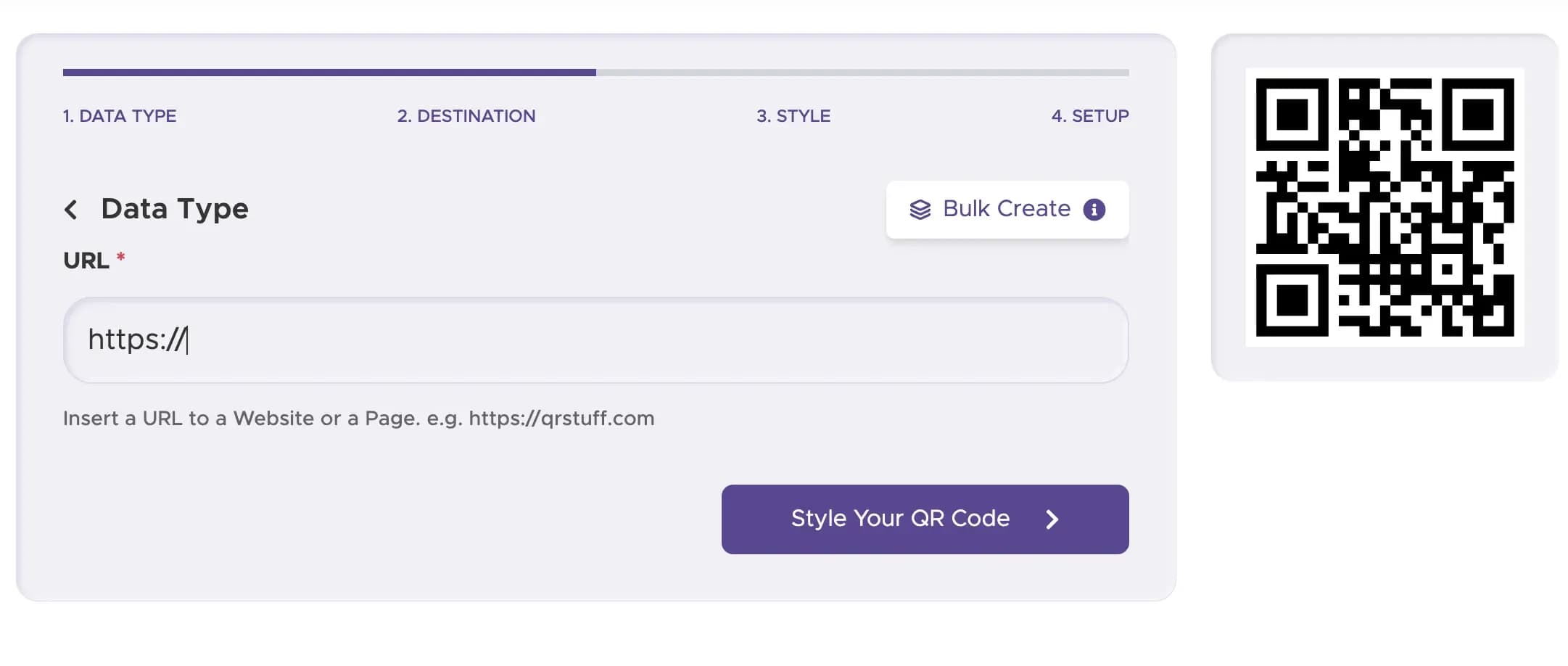
Paste the page address
Paste in the address of the page the code should open. QRStuff makes the code and, where the code needs one, the redirect. It does not handle logins or payments, so keep those in your own portal and payment provider.
Step 3
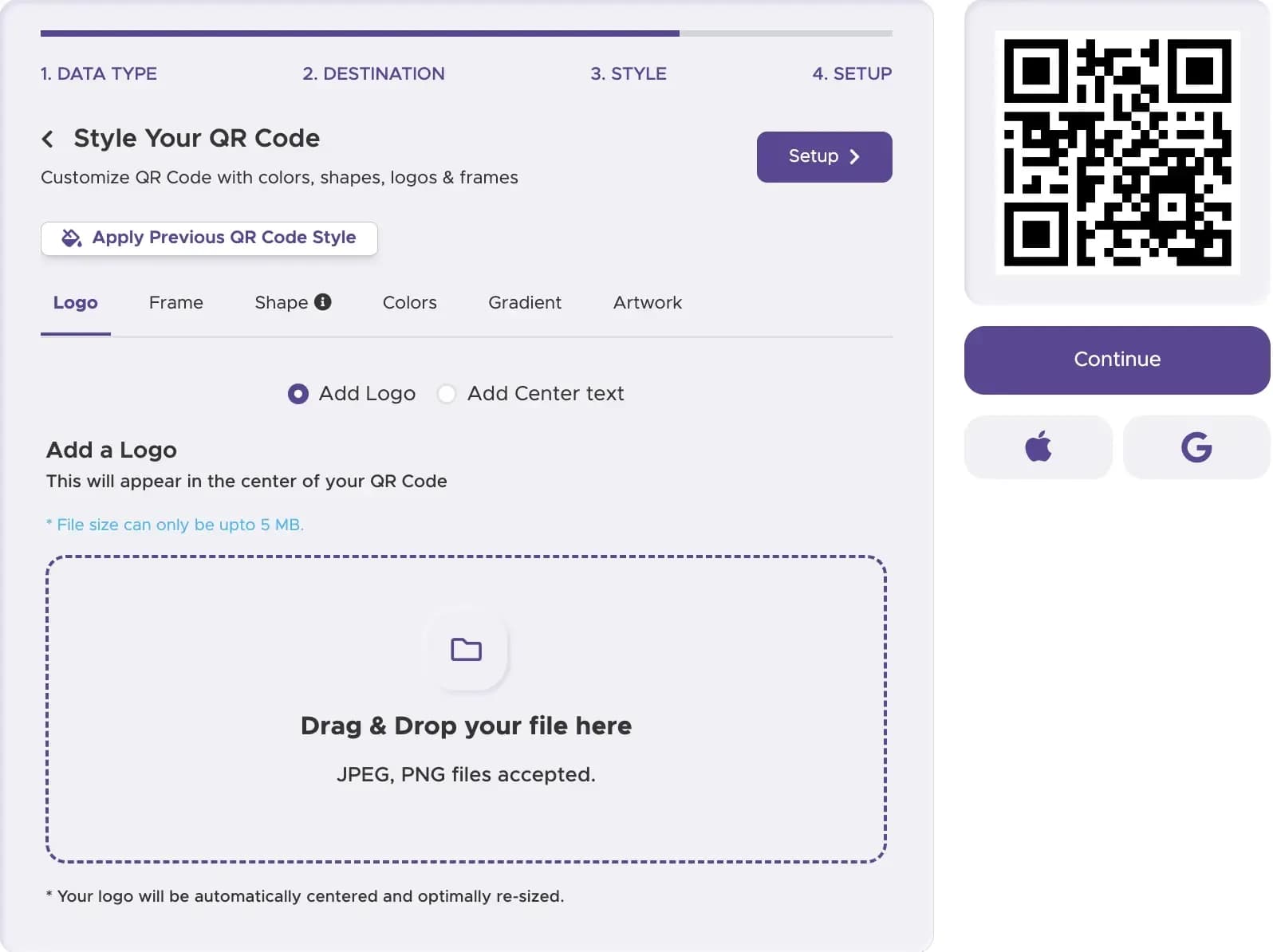
Make it recognizable
A recognizable code reassures clients. Logo, colors and frames belong to Full Suite and Enterprise, so Free Suite and Lite Suite accounts get plain black and white. Either way, keep contrast high, since a failed scan on a statement looks careless.
Step 4
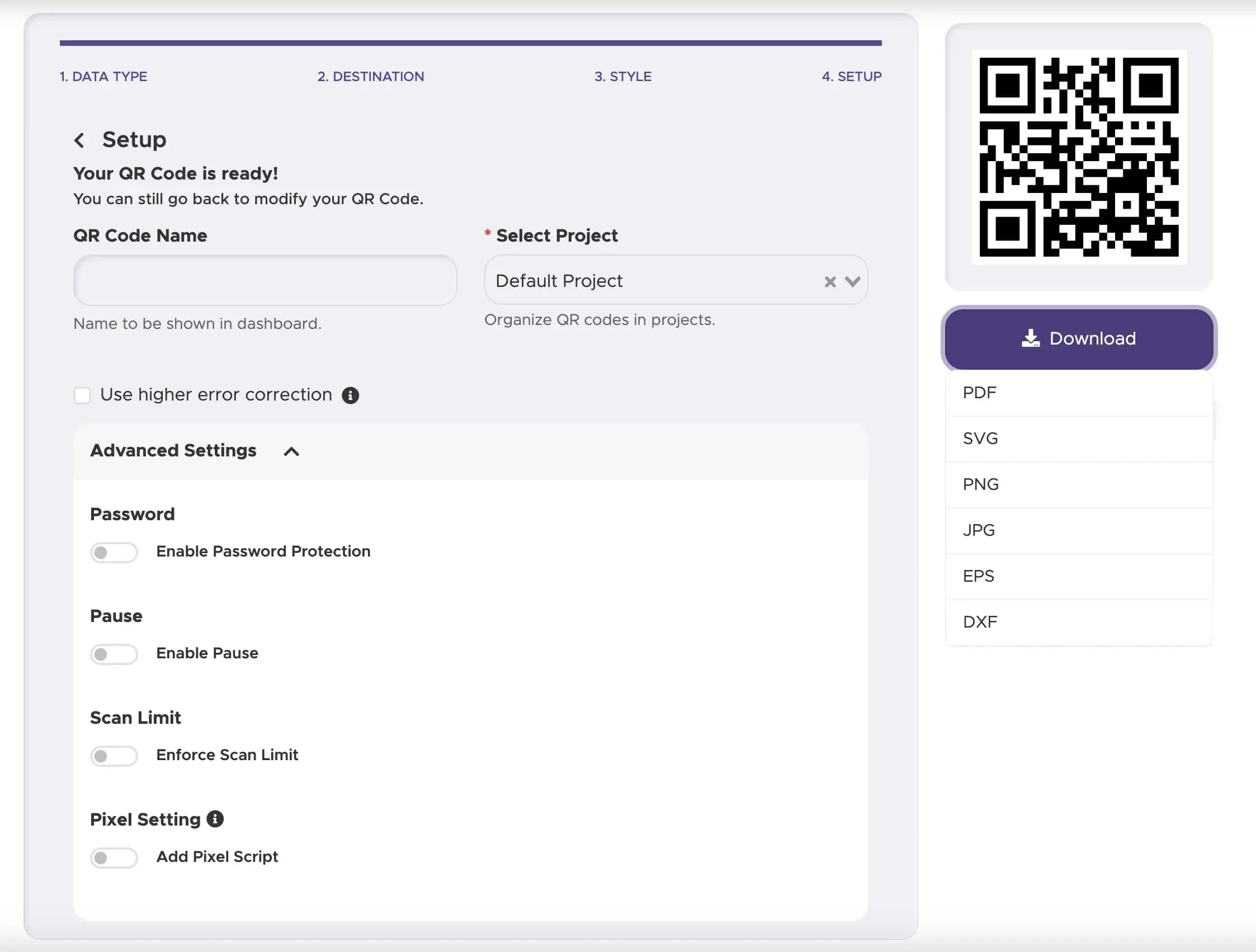
Download the file and proof the print
Download the file for print and digital use, and scan a printed proof before the mailing goes out.
Step 5
See which mailings get read
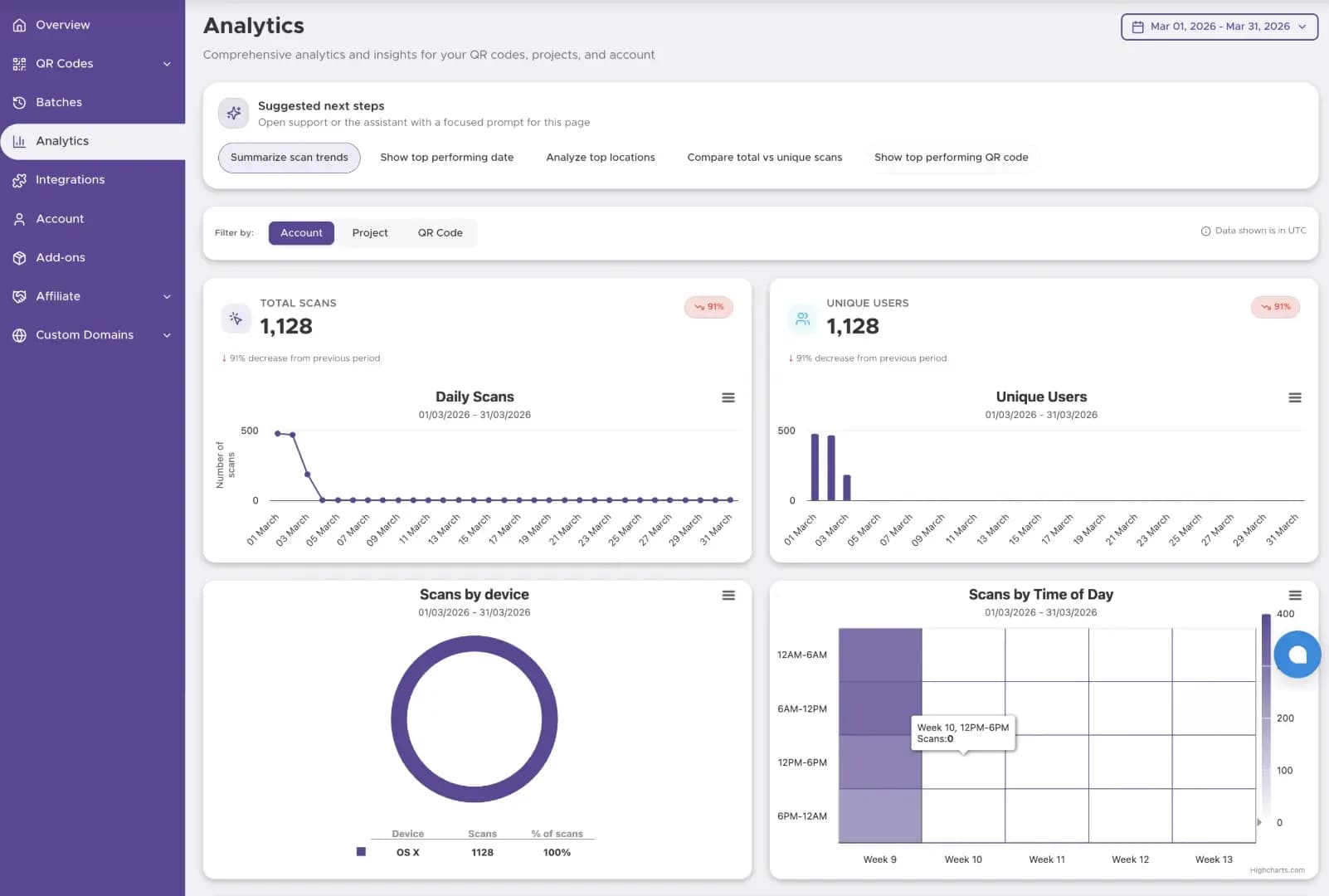
On Lite Suite or above, open the dashboard and compare branches, documents and mailings by device, country and time of day. That shows which ones bring visits, so you can change any page that is not working.
Insurance QR code examples from banks and insurers

Insurance cards
A motor or health insurance card with a code takes the holder to the policy documents, so the cover details are on the screen when the card comes out.
Product flyers and rate sheets
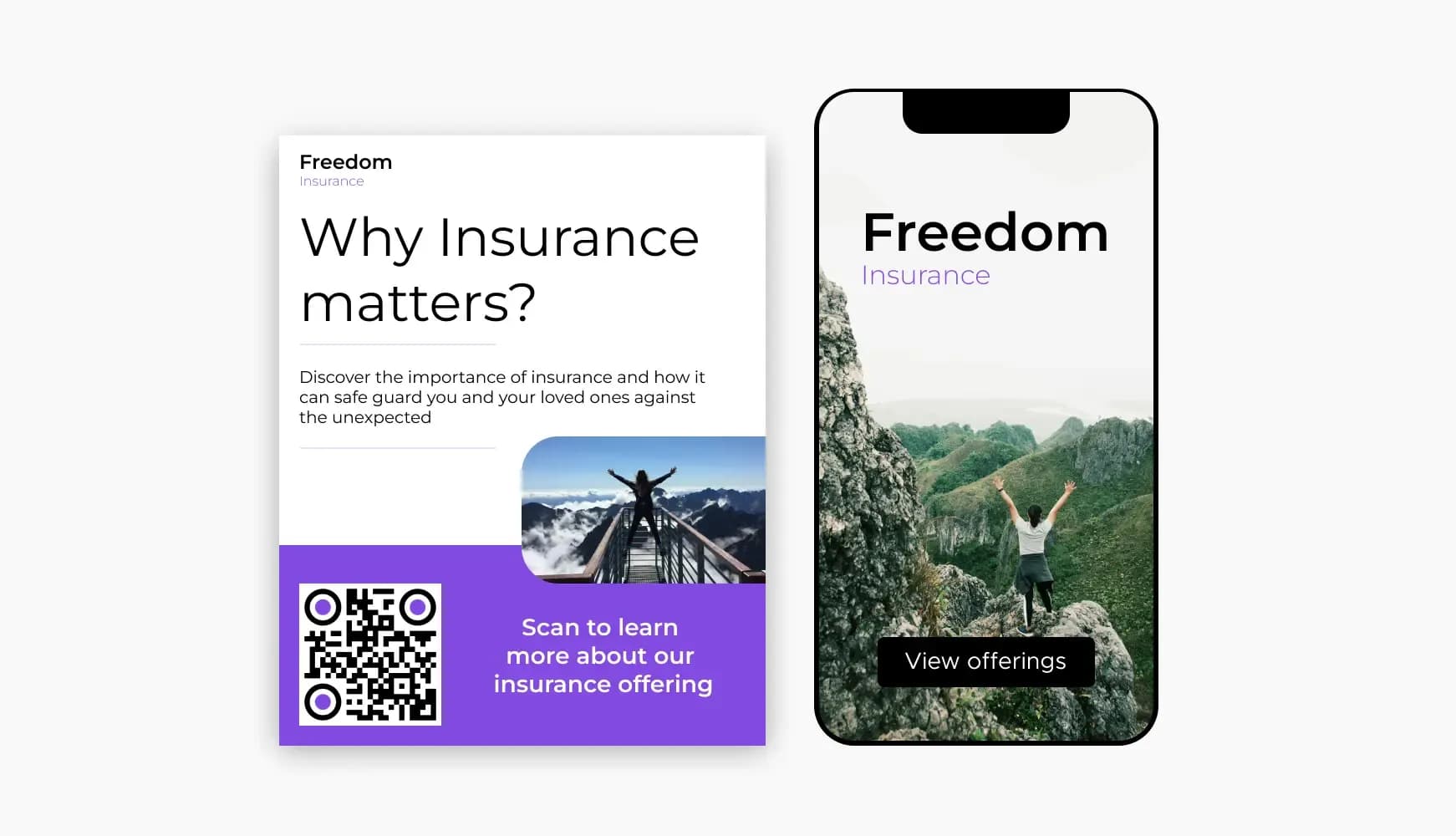
A flyer or branch poster can carry a code to the page that explains the product, and a rate sheet at the counter can link to today's rates, so a client can check the printed figure against the live page.

Advisor business cards
The code on an advisor's card saves their details to a phone or opens their professional page. As a dynamic code it stays current after the cards are printed.
Are QR codes secure enough for financial services?
The code only carries a web address, so the risk sits in the page behind it. Send codes to an HTTPS address that you control, keep account numbers and personal data out of the code itself, and never use a code to ask for a password or a card number.
Print a short line such as "Scan to start a claim" or "Scan for policy details", and the page address in words beside it, so a client knows where the code leads before tapping.
Open your payment and portal pages on mobile, including the wallets and banking apps your clients use. A page that only works in a desktop browser loses the client at the moment of scan.
A page can be withdrawn or compromised after the code is printed. Keep a list of where each code appears and who owns the page behind it, so the right team can act at once.
Try it on one policy letter
Put one code on one policy letter and see what clients do with it. A static code needs no account; scans are counted on dynamic codes from Lite Suite.
Do finance and insurance teams need dynamic QR codes?
Yes for forms, portals and documents that get replaced, while a page that never moves can stay static.
Best QR code types for banks and insurers
A PDF code suits policy guides, disclosure documents and prospectuses that you can replace when terms change. A PDF code is dynamic, so you can swap the file after printing; uploading it (up to 11 MB) needs Full Suite or Enterprise.
A Google Form code collects quote requests and feedback in your Google account.
What changes when the code is dynamic
| For a bank or insurer | Static code | Dynamic code (QRStuff) |
|---|---|---|
| The prospectus link changes | The address is part of the pattern, so a new link needs a new code and a reprint. | Edit the address or swap the prospectus; mailed letters open the new version. |
| Comparing branches and mailings | Nothing is reported. | Counting starts at Lite Suite and breaks scans down by time of day, device and country. Full Suite and Enterprise add city and unique users; Free Suite dynamic codes report nothing. |
| A crowded card or label | A long link makes a dense pattern on a small card. | The code holds a short redirect address, which leaves the modules larger. |
Can banks and insurers track QR code scans, and what size should the code be?
Yes, from Lite Suite upward: a dynamic code's scans appear in the dashboard so a branch can see which letters and cards get read. Size depends on how far away each one is scanned from.
What a scan records
Each scan stores its time, the device type, the visitor's IP address, a location derived from it and a device cookie, so your privacy notice should cover them. To see what clients did next, put your own UTM campaign name on the claim-form URL and read it in GA4; UTM is a plan feature, so check yours before a mailing goes out.
Size and print settings for financial documents
Work out the reading distance and divide by ten. On a claim card or statement the code can shrink to 0.8 in (2 cm). A letter or counter notice is comfortable with a code about 1.6 to 3.2 in wide, roughly 4 to 8 cm; only a branch window or poster, read from the street, calls for 6 in (15 cm) or more.
Statements are printed in big batches where a raster file can blur, so hand the printer an SVG or EPS, vector files for Full Suite and Enterprise accounts (pricing); PNG and JPG remain free. Leave four modules of blank border on a matte, non-glossy area. Adding a logo switches higher error correction on by itself.